

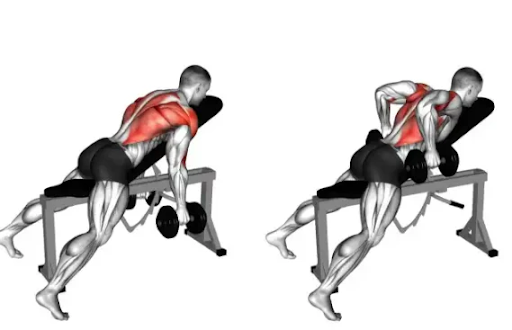
Building a strong and balanced back is crucial for strength athletes to perform at their best. Every significant lift is supported by a strong back, which also helps to stabilise the spine under stress and enhances muscular balance in general. Athletes depend on equipment that offers biomechanical accuracy, steady resistance, and effective movement in sports performance settings.
Prime gym equipment created to improve targeted muscle recruitment and performance output is being used more in modern training facilities. The prime chest supported row, an exercise machine that is quickly becoming a mainstay for serious lifters who desire quantifiable progress and a lower risk of injury, is one of the most useful tools in this category.
Why Back Training Matters for Strength and Power
The back stabilises the torso during squats and deadlifts, provides pulling strength for workouts such as pull-ups and rows, and ensures correct shoulder function during pressing activities. Athletes with weak or unbalanced backs have poor posture, are unable to transfer power across the posterior chain, and are more likely to injure their shoulders and lower backs.
Barbell or dumbbell rows are examples of typical free weight row modifications that can be quite beneficial. However, because they frequently rely heavily on core and hip stabilisation, activating the upper back muscles may be more difficult. Lifting in the improper position, being weary, or having a technical difficulty can all make training less effective. This is why purpose-built strength training equipment can give athletes a significant performance advantage when they wish to increase strength and exercise for an extended period of time.
The Advantage of Biomechanical Precision
High-level training facilities now put equipment that promotes natural movement patterns and lets users change the resistance to meet their strength curve at the top of their list. A lot of new commercial strength machines use engineering systems that keep the tension the same across the whole range of motion. This reduces stress on the joints and lets the athlete isolate muscles better.
This is very important for strength athletes who need specific overload instead of wasted energy and unneeded compensations. Lifting greater weights is not the only thing that makes back training work. It’s about using the right amount of force in the right range and gaining strength where it counts.
Why the Chest Supported Row is a Game Changer
The prime chest supported row is one of the best premium rowing machines because it can target certain muscles without putting too much strain on the spine. This makes it one of the best instruments for building up the upper and middle back. Some of the main benefits are:
1. Superior Muscle Isolation
The chest pad stops the body from swinging too much and slows it down. This keeps the lats, rhomboids, and traps in the spotlight. Athletes can get deeper contractions and a greater connection between their minds and muscles.
2. Adjustable Mechanical Resistance
The majority of commercial-grade chest-supported rowing machines include adjustable resistance curves and many grip alternatives. Athletes can shift tension to certain areas of their backs, concentrate on the weaker sections of the lift, and better target their strength training.
3. Injury Prevention and Spinal Control
Chest support takes some of the weight off the lower back. This is really crucial for people who already do large deadlifts or power activities. If your lower back gets tired or doesn’t recover well, you are more likely to get hurt. Stability-based rowing can help you keep up the quality of your training without hurting your back.
4. Correcting Muscle Imbalances
Unilateral or single-arm rowing variations enhance symmetry and reveal faults between sides. If you have balanced pulling strength, you will have better outcomes in pressing activities and full-body lifts.
How to Program Chest Supported Rows for Strength Gains
Depending on your training goals, you can employ the chest-supported row in a number of ways. Some common ways to program are:
- A main horizontal pull for heavy sets of 6 to 10 reps
- An extra lift after deadlifts to help with posture and upper back endurance
- Along with vertical pulling activities like pull-ups to build balanced strength
- As part of recovery or corrective work, use lesser weights and slow eccentrics.
To make the most of your workouts, you must be consistent, gradually raise the weight, and control how you perform them.
Why Equipment Quality Matters
The calibre of the athlete’s performance is influenced by the calibre of the equipment. Better commercial equipment transfers strength more effectively, has smoother movement patterns, and is more adjustable. Higher loads, greater volume, and long-term resilience are supported by robust engineering and construction. These variations are directly associated with enhanced performance and decreased risk of injury for competitive athletes.
Ultimately, purchasing highly precise equipment is an investment in training longevity and performance results.
Elevating Strength Training Standards
As athletes and coaches search for more smart ways to develop strength and resilience, strength training continues to change. Back training has become more strategic and efficient with the development of prime gym equipment, especially the prime chest supported row. Effort is no longer the only thing used by serious lifters. They are depending on tools supported by research that maximise strength growth and improve movement quality.
Researching high-end commercial strength equipment offers athletes, gym owners, and performance centres in Australia the chance to improve training standards and achieve new heights of success.
